The brief
Biji-biji Initiative is a Malaysian social enterprise that works on sustainability and upcycling. Its
environmental exhibition, Planet Us, was supported by the U.S. Embassy in Kuala Lumpur. It travelled to
several Malaysian states and included an online game, so that people could keep learning after they left the
exhibition hall. Biji-biji outsourced the development of that game to us. The design, illustration and
content are Biji-biji's; we built the game.
The aim was awareness: to get players thinking about everyday sustainable choices, and to make the learning
feel like play rather than a lecture.
How the game works
A footprint to beat. Players sign in with Google or Facebook, or simply play as a guest, then choose an avatar
and a name. A few opening questions about their own habits — energy, single-use plastics, recycling — set a
starting carbon-footprint score, and a starting badge to match. From there the aim is the opposite of most
games: lower is better, and every good choice takes points off the tally.
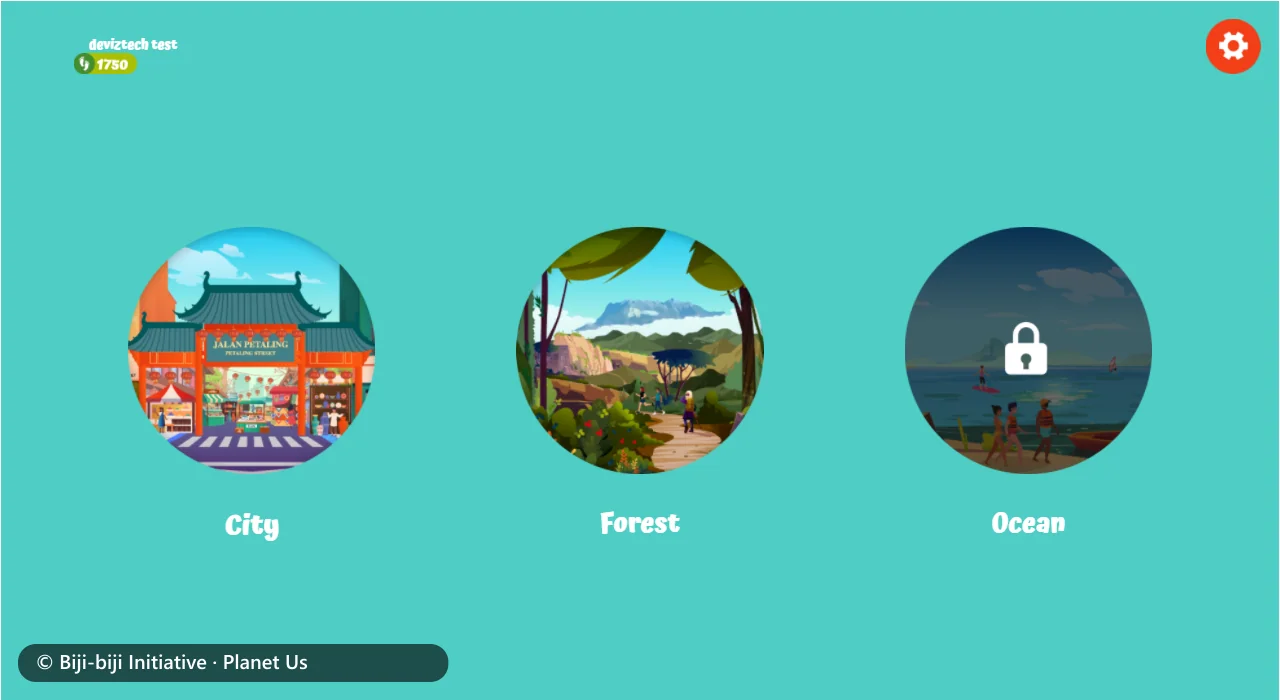
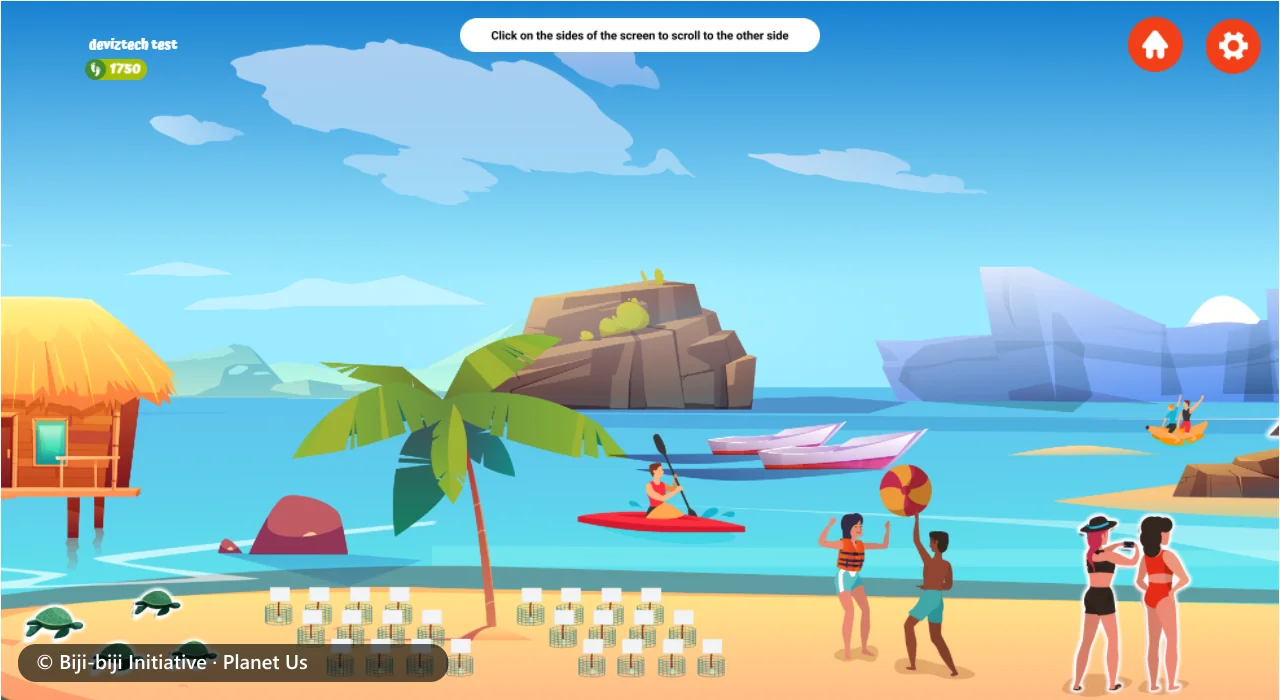
Three worlds. A world map offers a City, a Forest and an Ocean. Players scroll sideways through
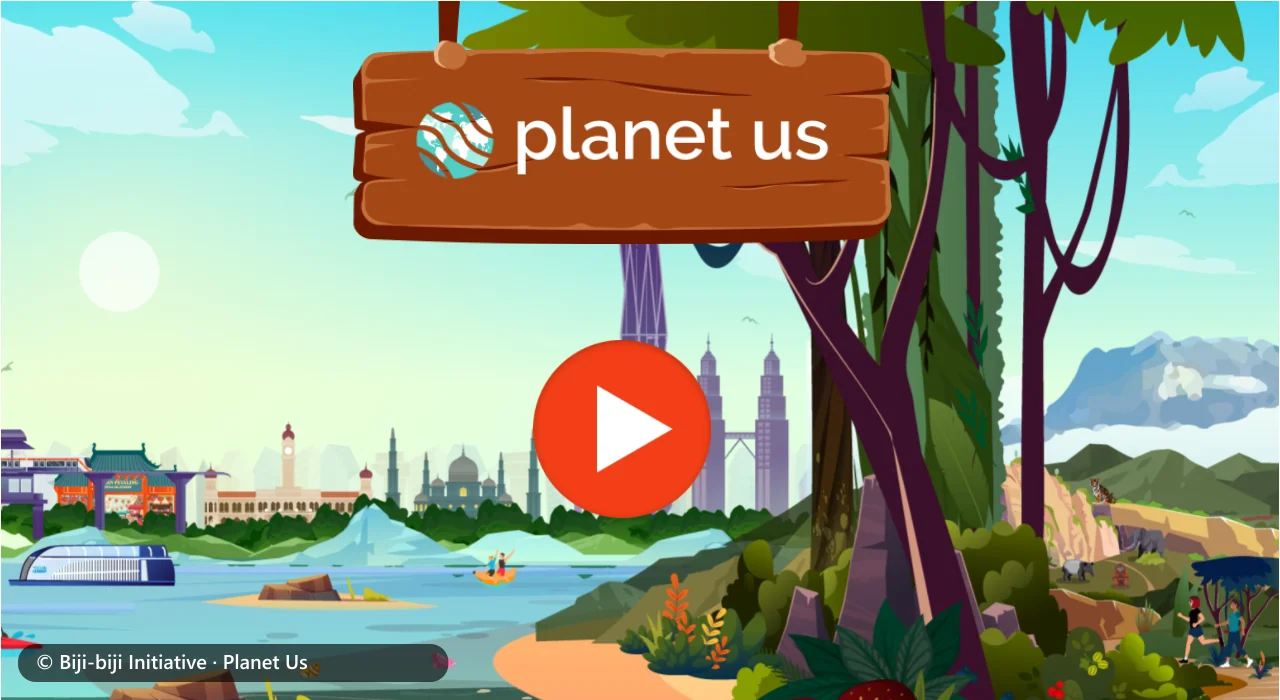
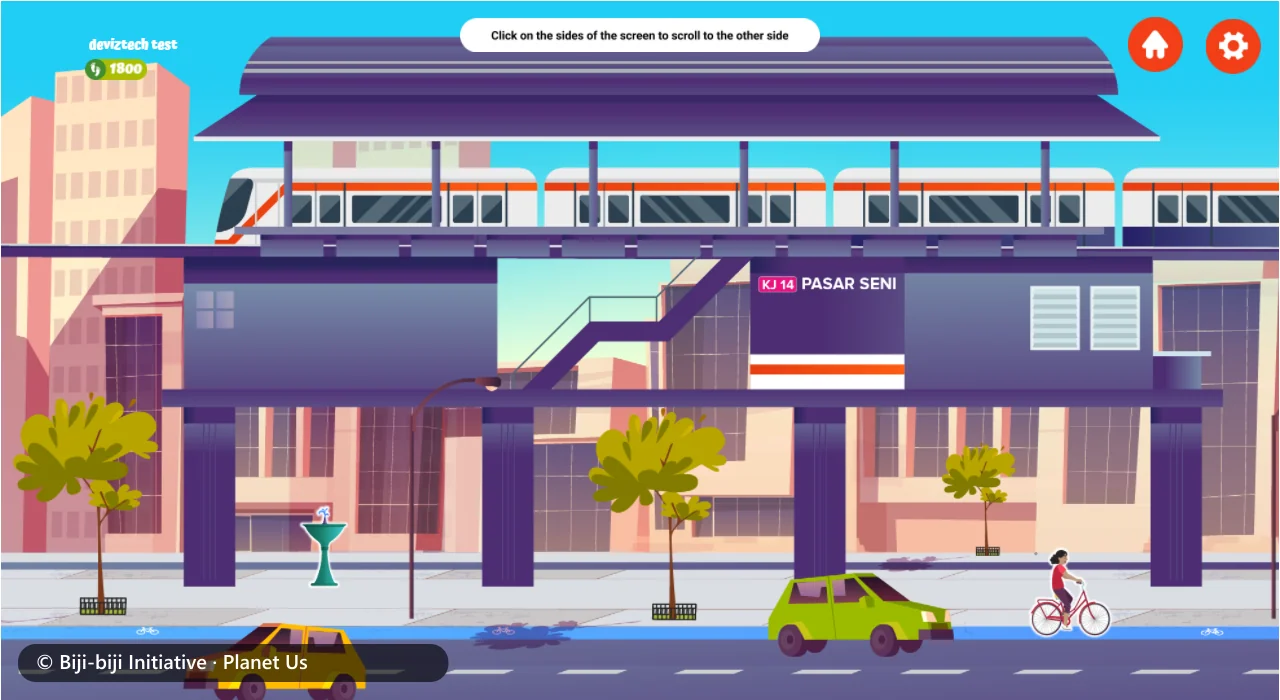
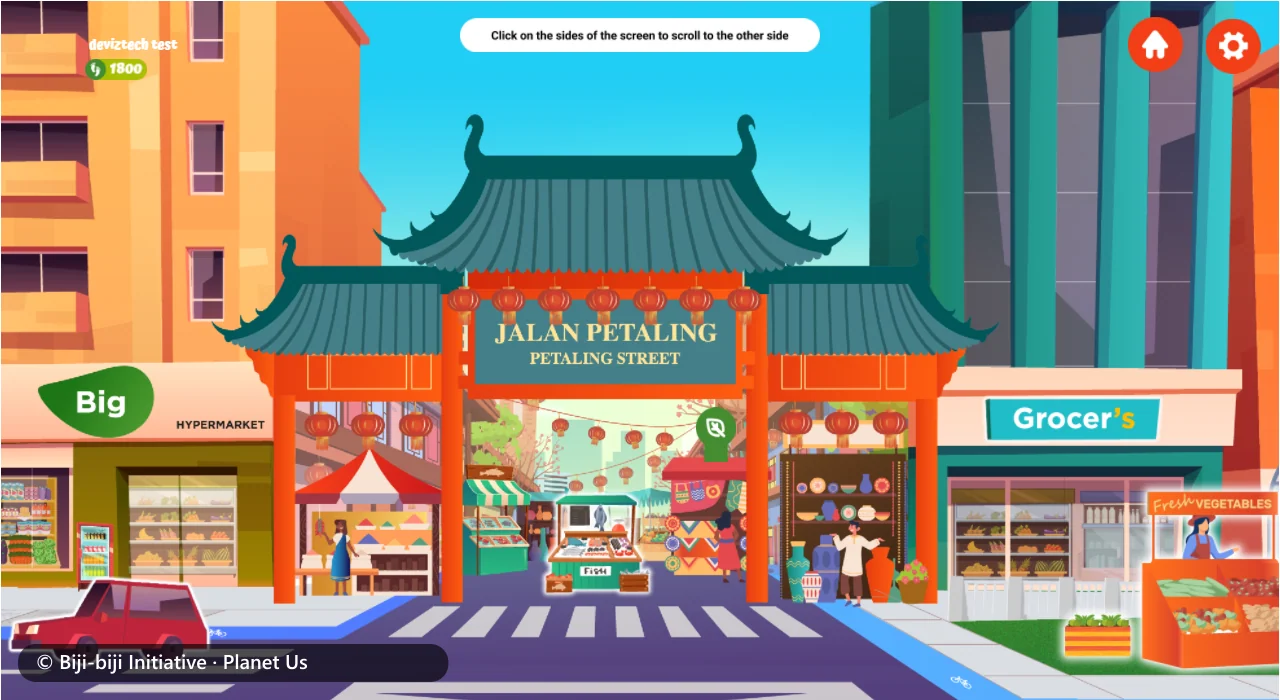
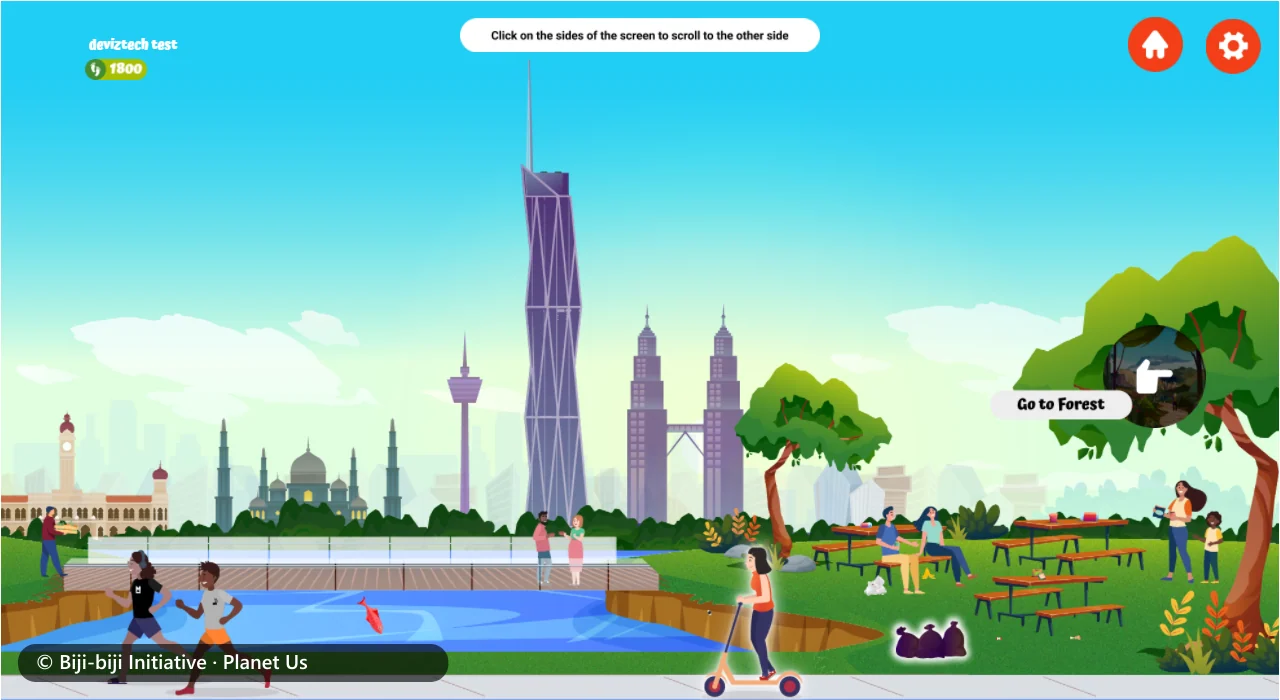
illustrated Malaysian scenes, guided by a hornbill. The City is Kuala Lumpur: the Pasar Seni rail station, Petaling
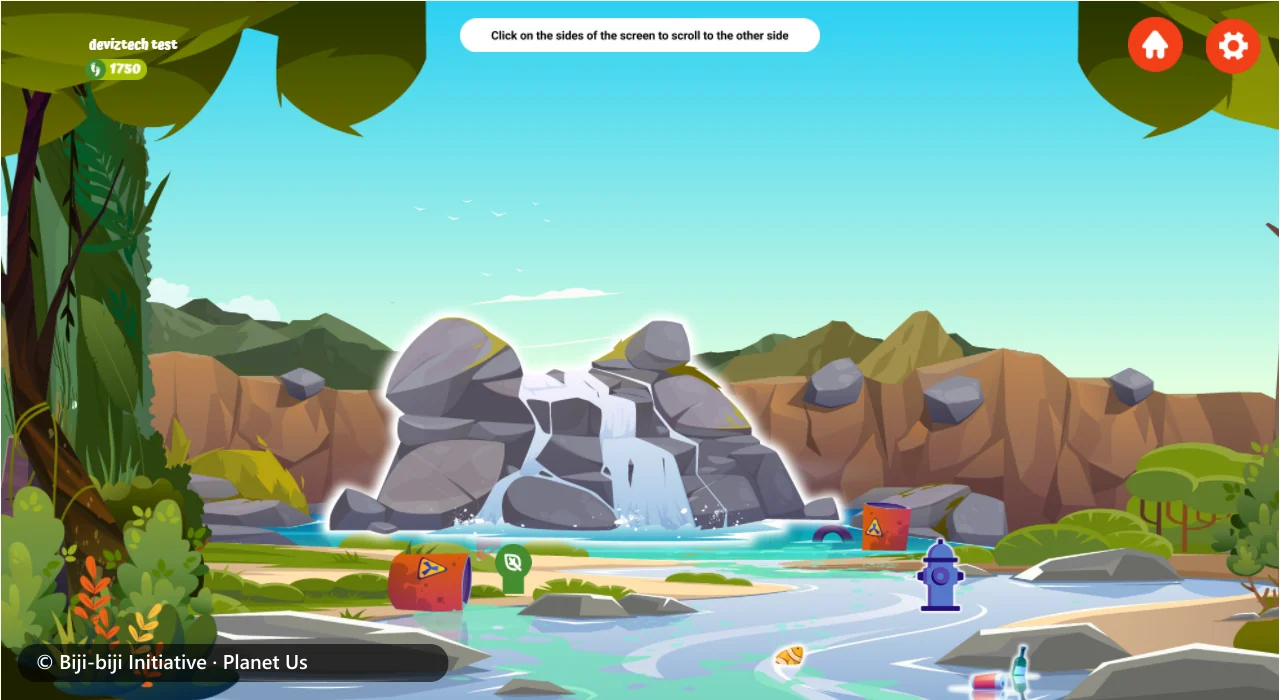
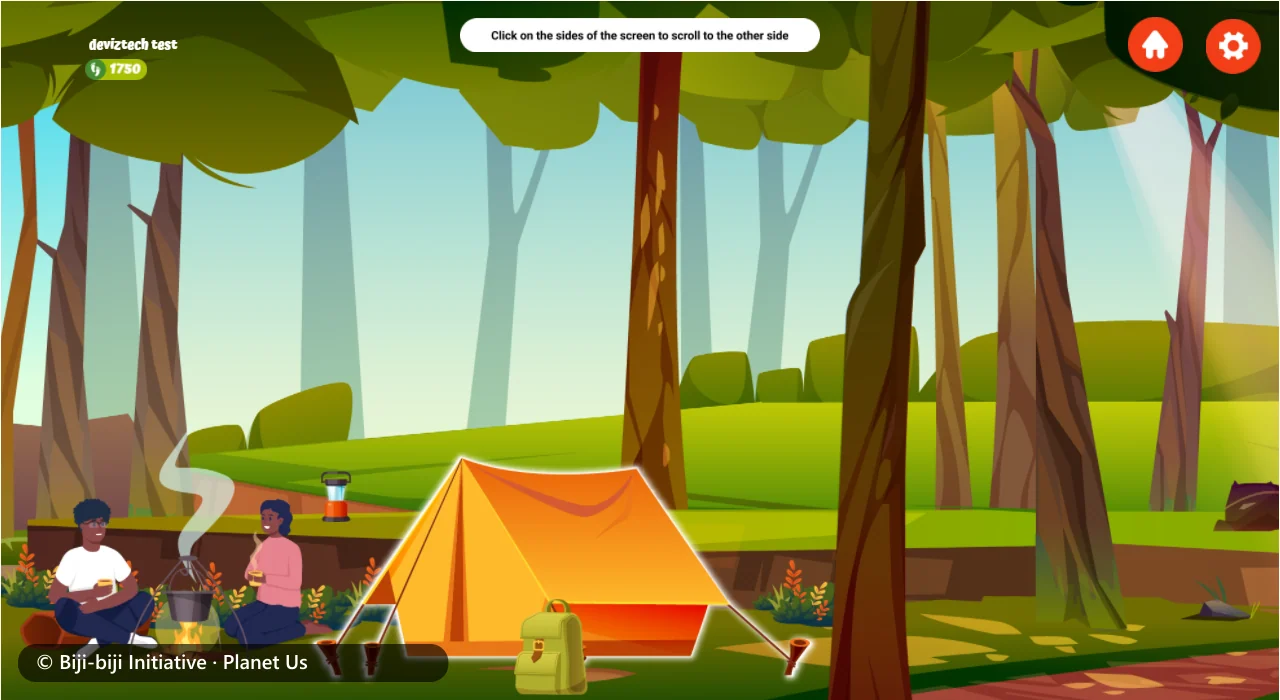
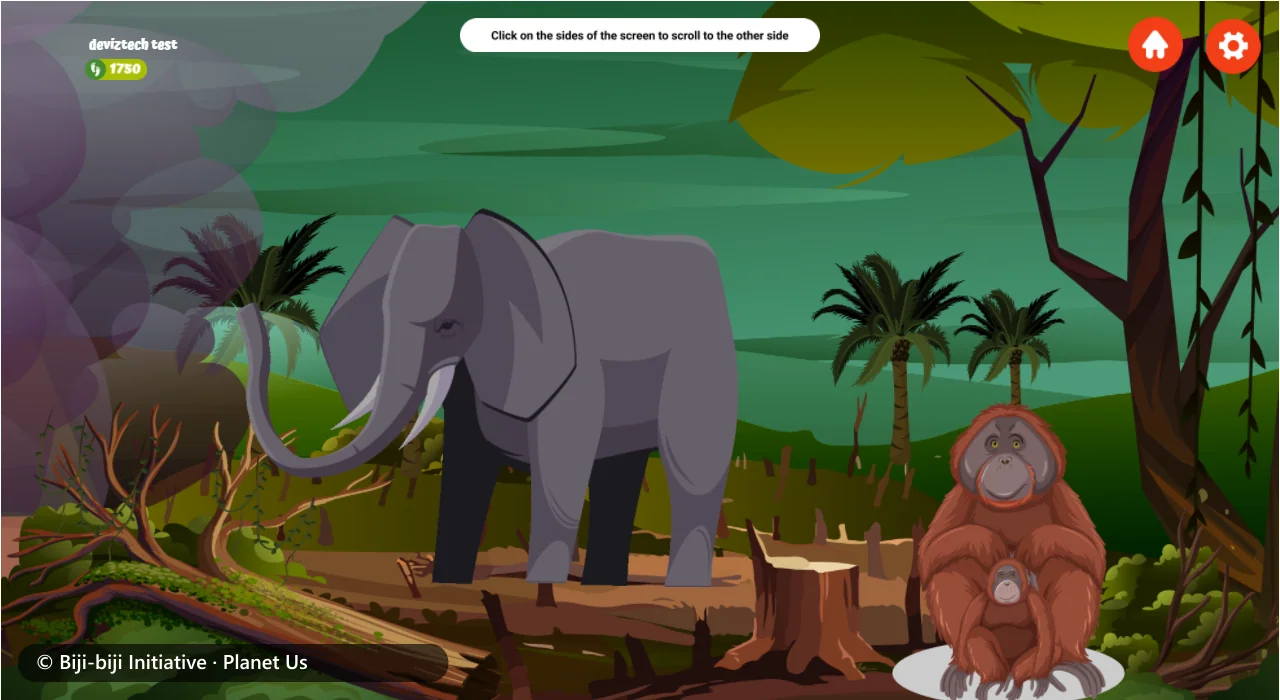
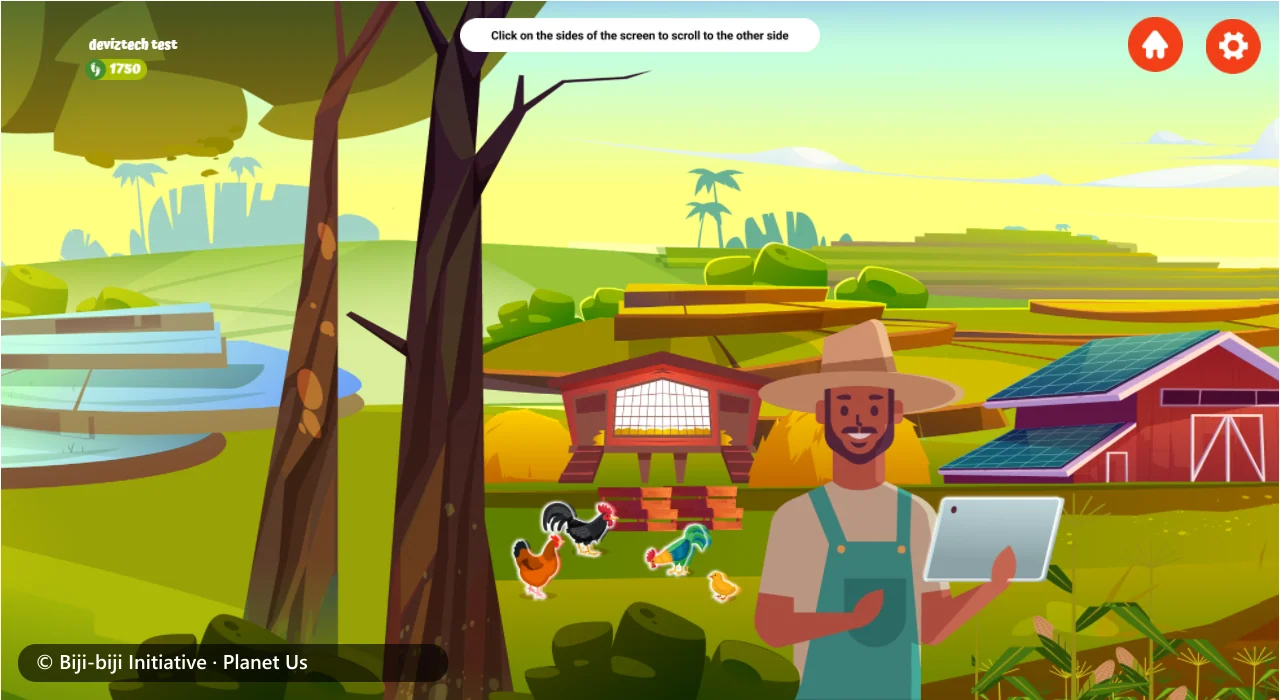
Street, a riverside park under the skyline. The Forest has a waterfall, a campsite, cleared land where wildlife is
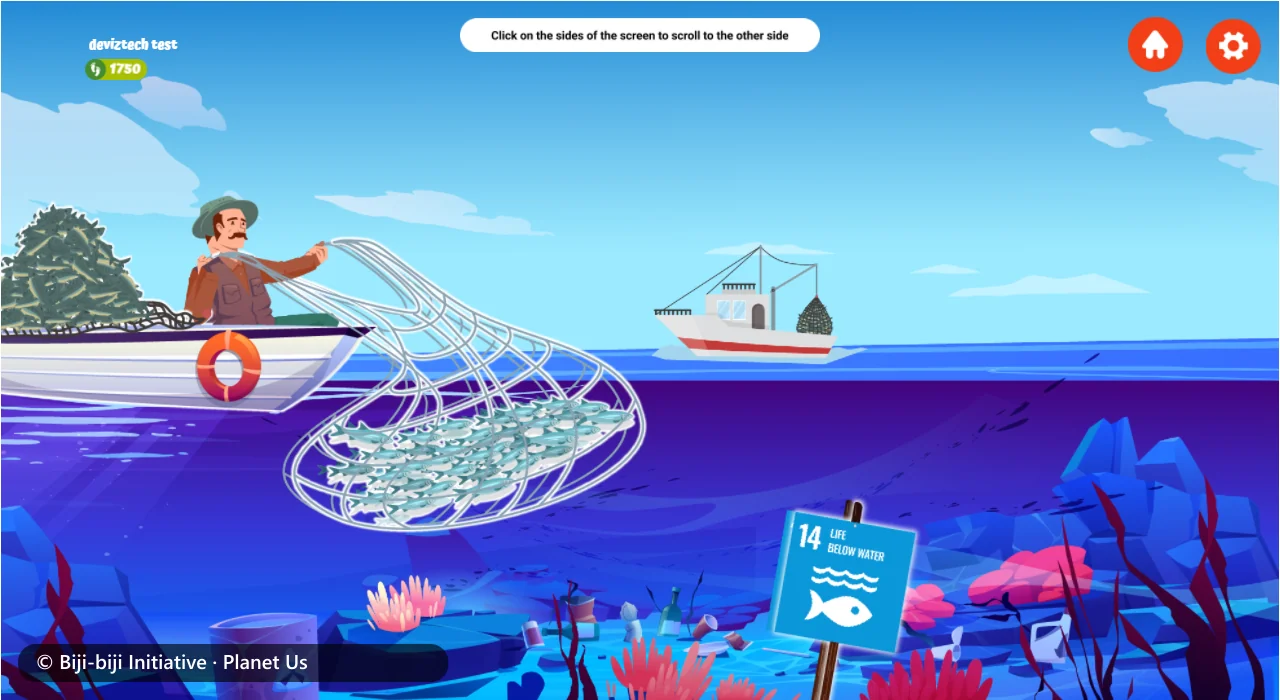
under threat, and a farm powered by solar panels. The Ocean has a beach with turtle nests and, below the surface, a
fishing net above a polluted reef.
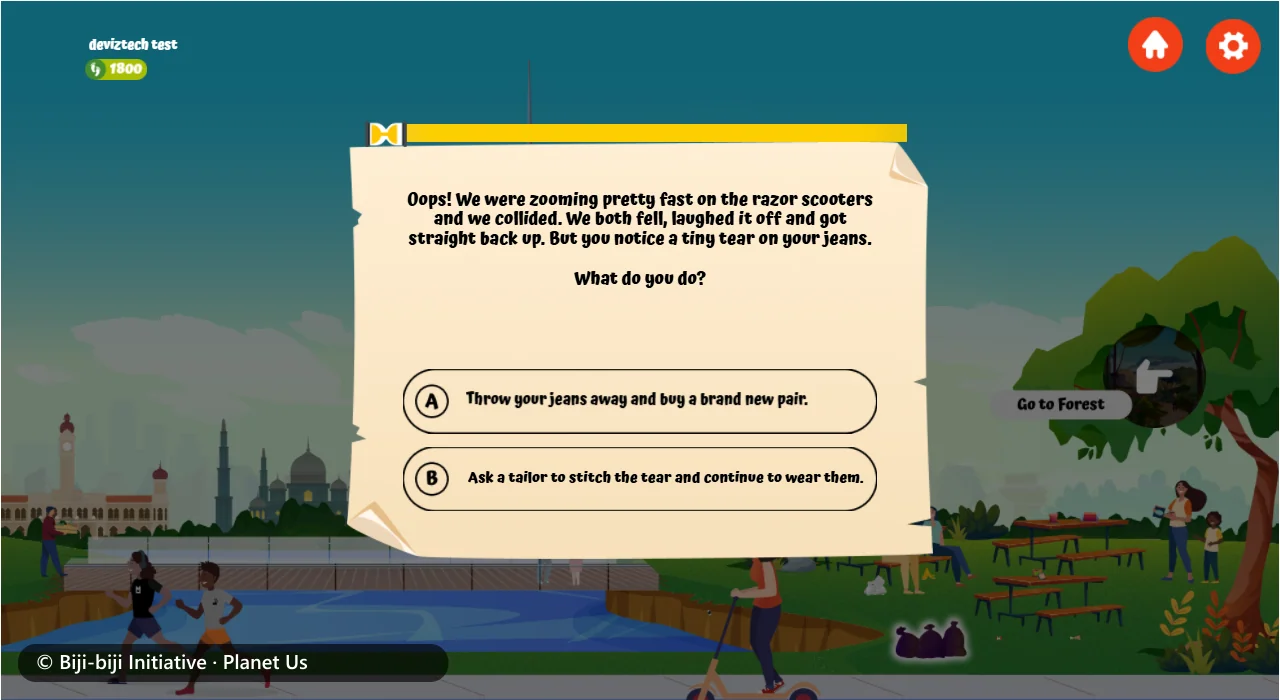
Choices, not lectures. Items in each scene light up. Tap one and a short, timed real-life scenario appears:
how do you get into the city, which bin takes an aluminium can, what do you do with a torn pair of jeans, or with
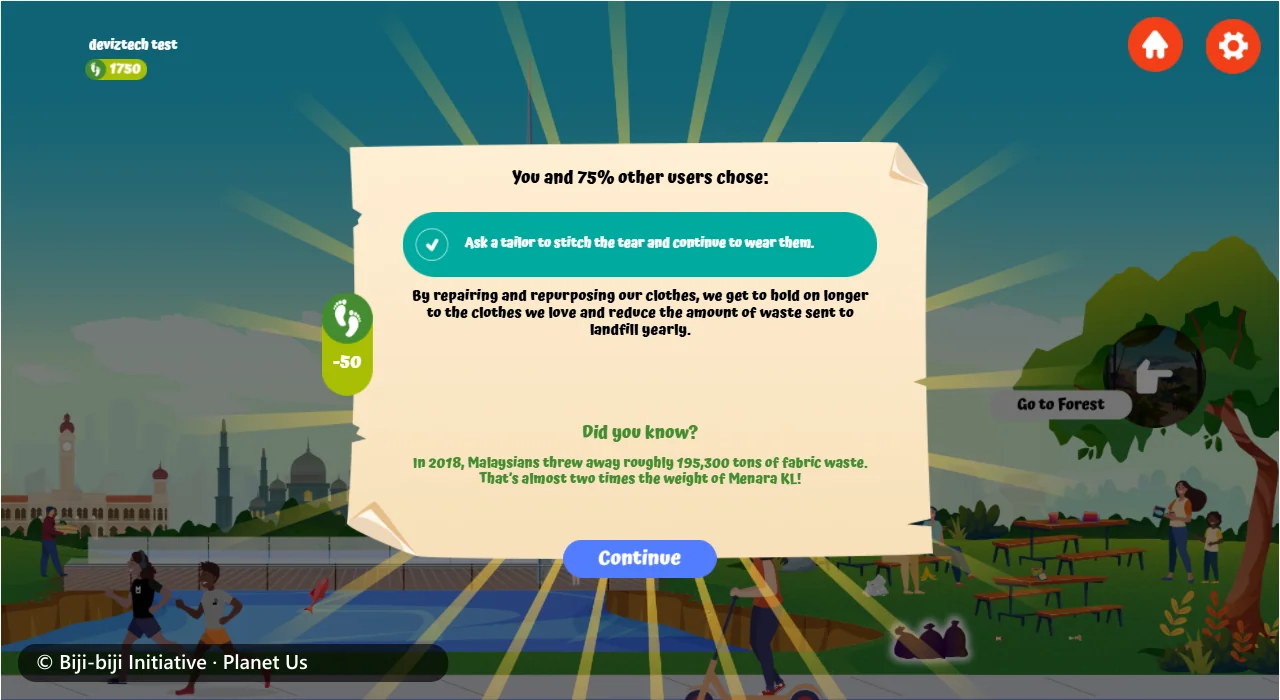
litter beside a waterfall? After you answer you see what share of other players chose the same, a short
explanation, a Did you know? fact, and your footprint drops. The facts are rooted in Malaysia — plastic
types the country can recycle, fabric waste, local waterfall clean-up programmes.
Hands-on moments. Between questions there is a timed drag-and-drop clean-up in which the player picks up
littered masks beside the River of Life and puts them in the recycling bin. Green leaf icons open short tips and
facts, including ones on United States environmental policy, and at the water's edge the game asks whether
players know the United Nations' Sustainable Development Goals, with a sign for Goal 14, Life Below Water.
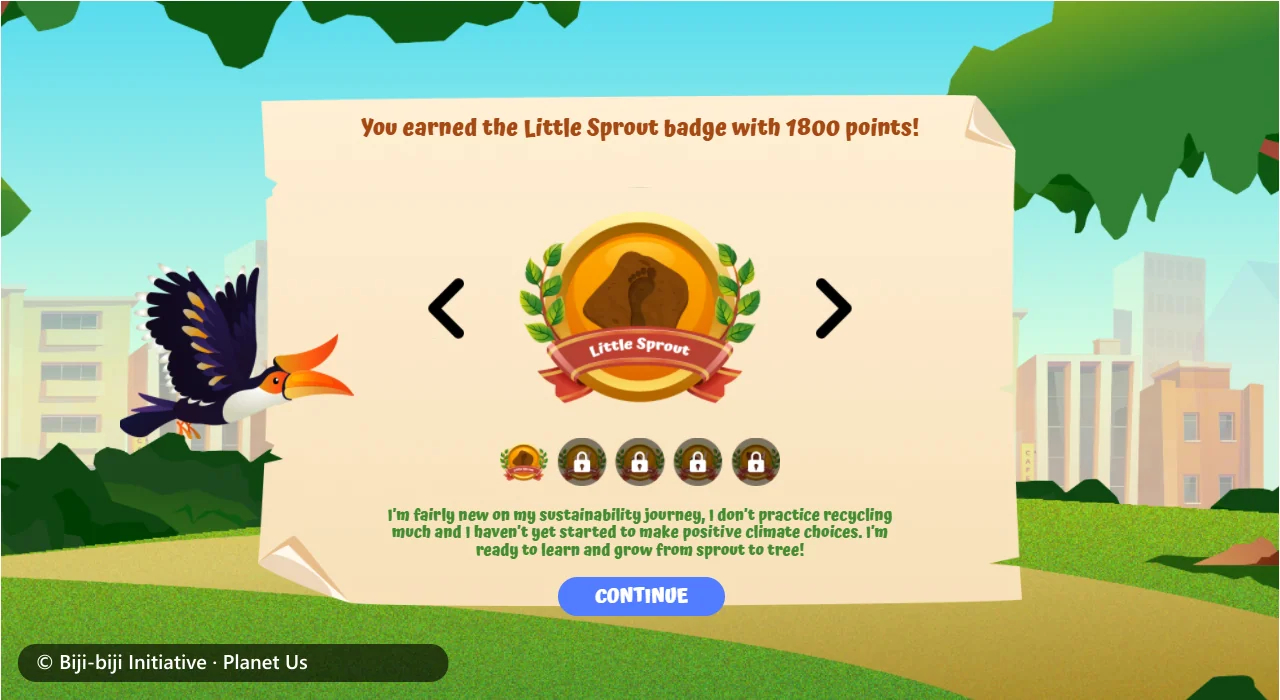
Badges. A player's footprint earns a badge from a ladder of five, beginning with Little Sprout. Leaving a
world early comes with a warning that it will affect the badge, which gives players a reason to finish.
Built for the browser
The game was built with the Construct 3 engine and runs in the browser from a link, with nothing to install, so
players can pick it up on the exhibition floor or later at home.
What we did
We developed the game itself: the screens and scrolling scenes, the scenario and quiz logic, the scoring and
badges, and the drag-and-drop activities.
Play Planet Us →
Talk to us about your learning game →
 Deviztech